Mobile home park investing, site by site
Understand the ownership mix, separate the rent streams, and phase infill before pricing the opportunity.
For investors evaluating an existing community or a plan to fill vacant sites.
Mobile home park underwriting models the income, operating costs, capital needs, and financing of a community of home sites. The starting point is the site inventory and who owns each home.
Keep today’s operating results separate from tomorrow’s infill. A supported plan shows both the cost of bringing sites online and when their income begins.
Start with the sites and ownership mix
Count developed sites before counting income. Separate occupied tenant-owned homes, occupied park-owned homes, vacant developed pads, and vacant park-owned homes.
Keep undeveloped land outside the operating site count until a supported development plan brings it into service.
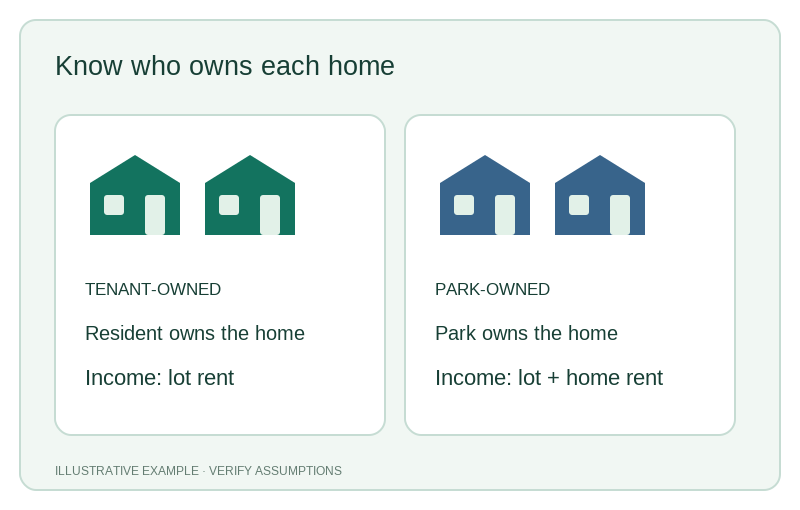
A tenant-owned home generally contributes lot rent to the park. A park-owned home can contribute both lot rent and a separate home-rent component.
That distinction changes the income model and the maintenance budget.
Go deeper: Mobile Home Park Investing in 2026: Benefits, Risks and Due Diligence
Separate lot rent from home rent
Build income from each ownership group rather than applying one blended rent to every site. For tenant-owned homes, multiply occupied sites by monthly lot rent.
For park-owned homes, model the lot portion and the home-only rent separately.
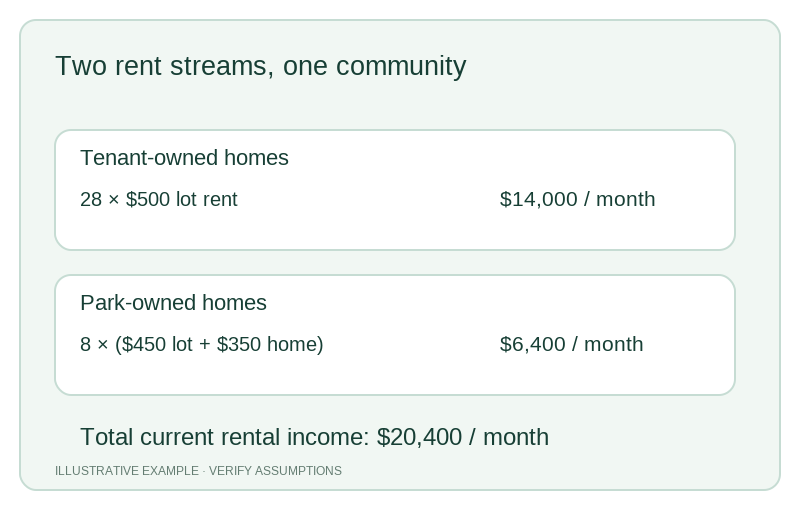
Example: 28 tenant-owned homes at $500 lot rent generate $14,000 a month. Eight park-owned homes at $450 lot rent plus $350 home rent generate $6,400.
Together, current monthly rental income is $20,400 before other income. Vacant sites earn no rent until occupied.
Build an expense and infrastructure budget
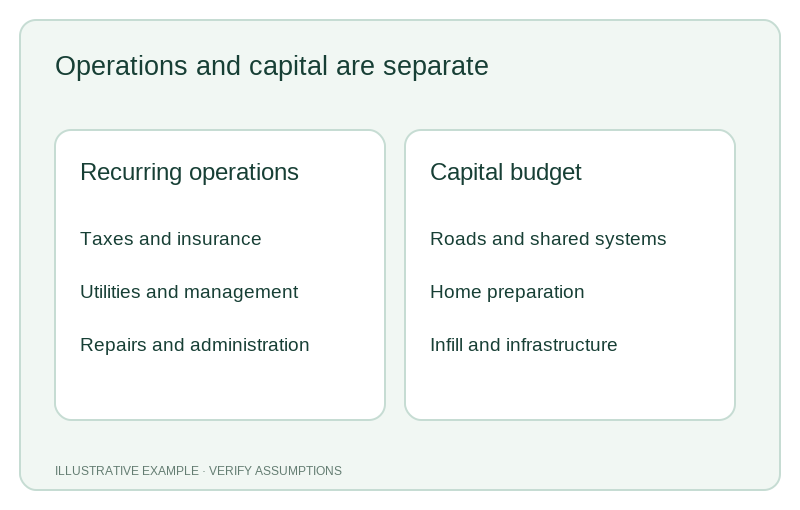
Reconcile recurring operating costs to actual records: property taxes, insurance, management, repairs, utilities, and administration. Identify which costs relate to the land and shared systems and which relate to park-owned homes.
Keep major capital work separate from routine operating expenses. Roads, water and sewer systems, electrical service, and home preparation can affect both the acquisition budget and the timing of occupancy.
Inspect the systems and support the cost estimate before relying on the upside.
Phase infill over time
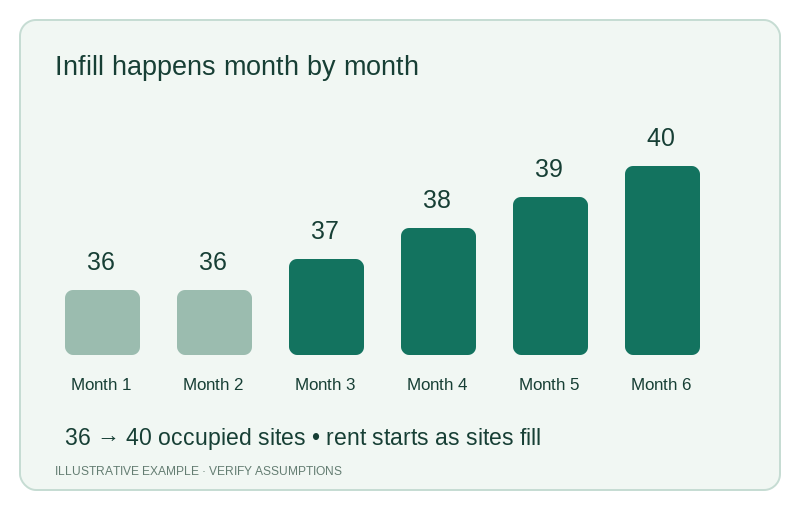
Infill is the process of bringing vacant sites into occupancy. Model the number of sites, preparation cost, delivery start, and lease-up period.
An empty developed pad and a vacant park-owned home may need different work before either produces rent.
In the sample, two vacant pads and two vacant park-owned homes fill evenly from months 3 through 6. Occupancy rises from 36 to 40 sites.
The model adds lot rent, home rent where applicable, and incremental operating costs as the sites are delivered. Year-one income is lower than a full year at stabilized occupancy.
Connect financing to year-one cash flow
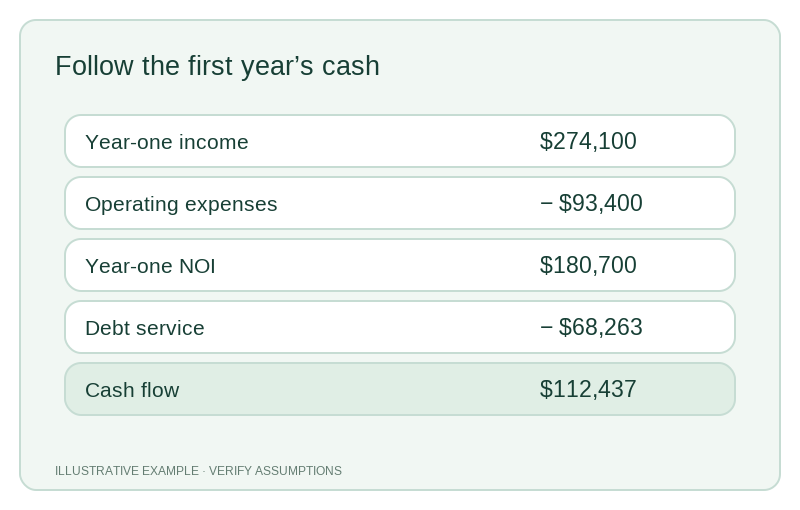
Start with purchase price, closing costs, and capital needs to estimate the cash required. Debt service then reduces the cash available after operating expenses.
Keep the funded infill and infrastructure budget visible alongside the purchase.
Compare year-one NOI and cash flow with the stabilized result. A healthy stabilized projection can still hide a tight first year if infill takes longer, operating costs arrive early, or financing payments begin before new rents.
Test the downside before the offer
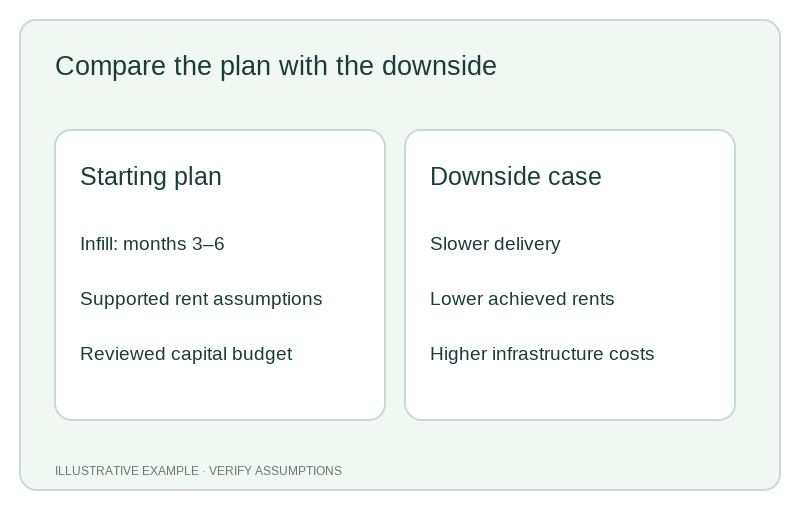
Run a slower infill case, a higher infrastructure budget, and a weaker rent case. Change one assumption at a time first so the effect is clear, then combine them into a downside scenario.
Document where rents, occupancy, utility costs, and capital estimates came from. Review site permissions, leases, infrastructure condition, and financing terms with the appropriate specialists.
The analysis organizes your assumptions; it does not replace verification.
The terms behind the model
Short versions here; where a full article exists, it owns the detailed treatment.
Tenant-owned home (TOH)
The resident owns the home. The park’s modeled rental income is the rent for the site.
Park-owned home (POH)
The park owns the home. Track the lot-rent portion and home-only rent separately.
Developed vacant pad
An existing vacant site. Verify its readiness and preparation cost before assuming occupancy.
Infill
Bringing vacant sites into occupancy over time. Income and incremental expenses begin as sites are delivered.
Stabilized income
The annual income at the modeled completed occupancy. It is distinct from income actually phased into year one.
Infrastructure capital
Budget for major shared-system work separately from routine operating costs and home preparation.
Go deeper, by subtopic
Community ownership and operations1 article
Cash flow and scenarios2 articles
Related guides: Real Estate Underwriting · Multifamily Investing · Property Research · All guides
 Put it into practice
How DealWorthIt fits in
Build the community from its site inventory, then follow the rents and costs as vacant sites become occupied.
- 01
Separate the ownership mix
Track tenant-owned homes, park-owned homes, and developed vacancies.
- 02
Keep rent streams visible
Adjust tenant-owned lot rent and park-owned home rent independently in the sample.
- 03
Follow monthly infill
Watch delivery phase in occupancy, rental income, and incremental expenses.
Illustrative sample. Basic MHP analysis is available on paid plans; advanced features depend on your plan. Verify every assumption before an investment decision.
DealWorthItAnimated sampleCedar Grove · 40 developed sites
At acquisition: 28 tenant-owned + 8 park-owned occupied homes · 4 vacancies
● T · Tenant-owned● P · Park-owned┄ Vacant
- Tenant-owned homes
- 28 occupied · 2 vacant pads
- Park-owned homes
- 8 occupied · 2 vacant homes
- Developed sites
- 40 · 90% occupied
- Undeveloped potential
- 6 pads · not operating inventory
Illustrative sample; constant rents, no turnover or growth. Park-owned lot rent stays $450/month. Infill uses linear monthly delivery; added expenses phase with delivery. Capital budget funded at closing. Closing costs, reserves, and income taxes excluded. Projections are not guaranteed.
Put the site plan into numbers
Explore the sample community and see how ownership mix and infill change its income.