Real estate development and new construction, by the numbers
A ground-up deal is a budget and a schedule before it is a property. How the development pro forma works: land, hard and soft costs, contingency, construction financing, carry, completed value and the spread that justifies the risk.
For investors underwriting their first ground-up project, and for anyone who needs to read a developer’s pro forma and know which line to question.
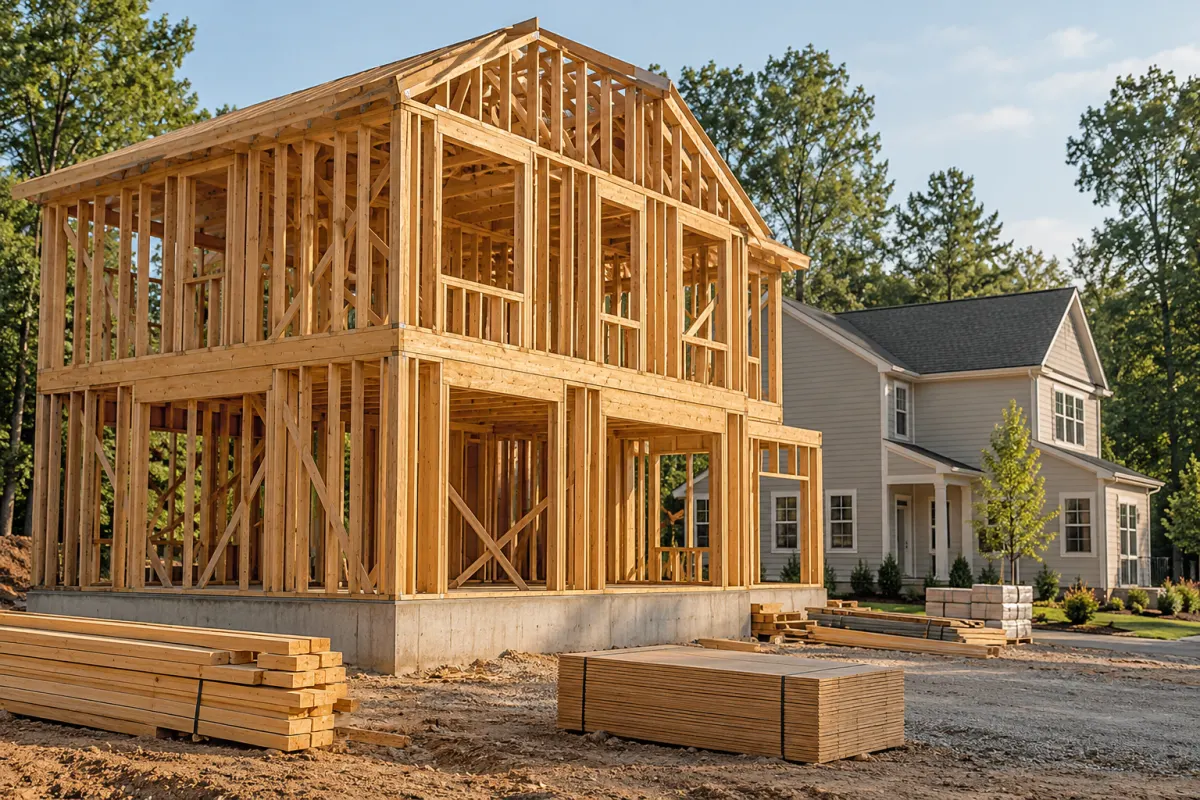
A development pro forma is the financial model for creating a building rather than buying one: everything the project costs — land, construction, fees, financing carry and a contingency — set against what the finished asset will be worth once complete and stabilized. The decisive output is the spread between total development cost and completed value: the development profit that pays for construction risk.
It is a different model from an operating pro forma, and applying the wrong one is the classic error. An operating property has income from day one; a development has only costs until lease-up, financing that funds in draws rather than at close, and a value that does not exist until the work is done.

The development budget: four buckets
Total development cost breaks into land and acquisition, hard costs (the physical construction — priced per buildable square foot), soft costs (design, engineering, permits, legal, financing fees and the carry itself), and contingency. The discipline is keeping the buckets separate: hard costs escalate with materials and labor, soft costs escalate with time, and a budget that blends them hides which risk is growing.
Contingency is a budget line, not a mental buffer — typically set as a percentage of costs and treated as spent until proven otherwise, because change orders will find it.
Go deeper: How to Build a Real Estate Development Pro Forma · Hard Costs vs Soft Costs in Real Estate Development
The construction loan is a different animal
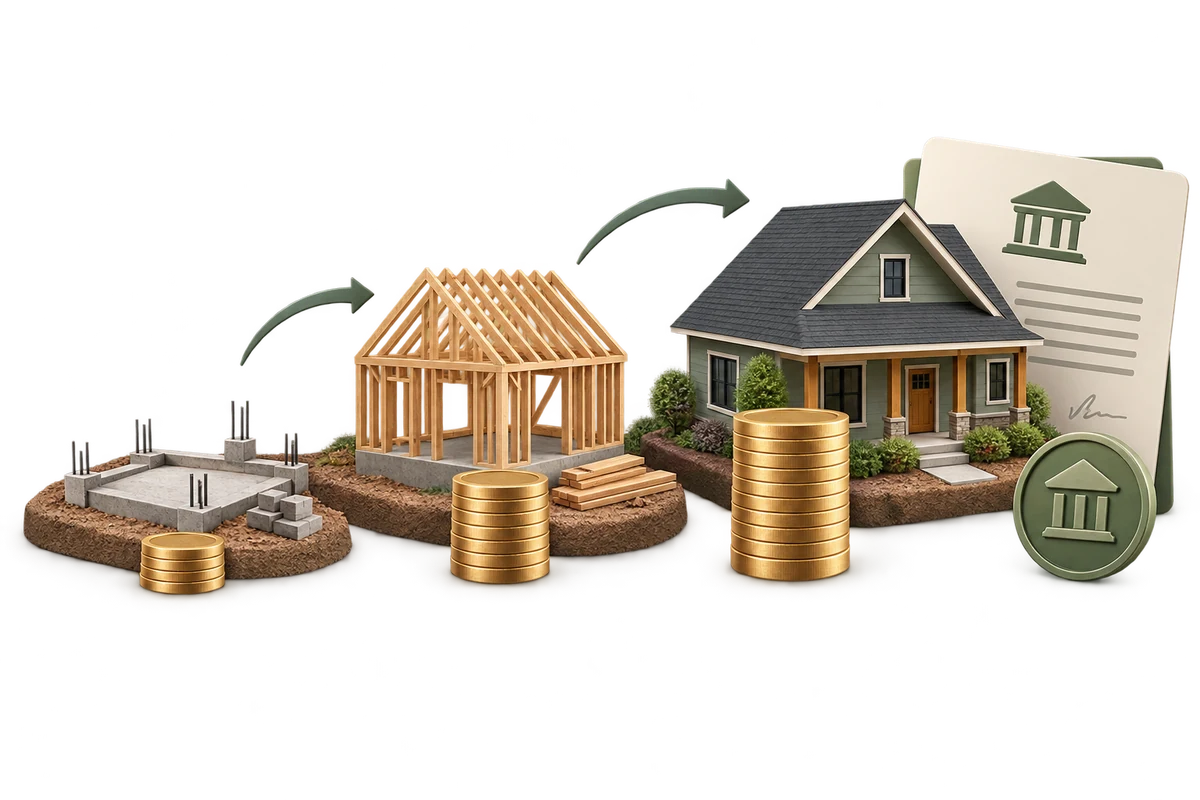
Construction debt is sized by loan-to-cost — the loan against the total budget, the development analogue of loan-to-value — and it funds in draws against completed work rather than all at close. Interest therefore accrues on the drawn balance, not the commitment, and it accrues while the project produces no income; the interest reserve that covers it is itself part of the budget.
Rate, term and the draw schedule belong in the model explicitly, because a slower project pays interest longer on a larger average balance.
Go deeper: Construction Financing: LTC, Draws & Interest Reserve
The schedule is a cost line
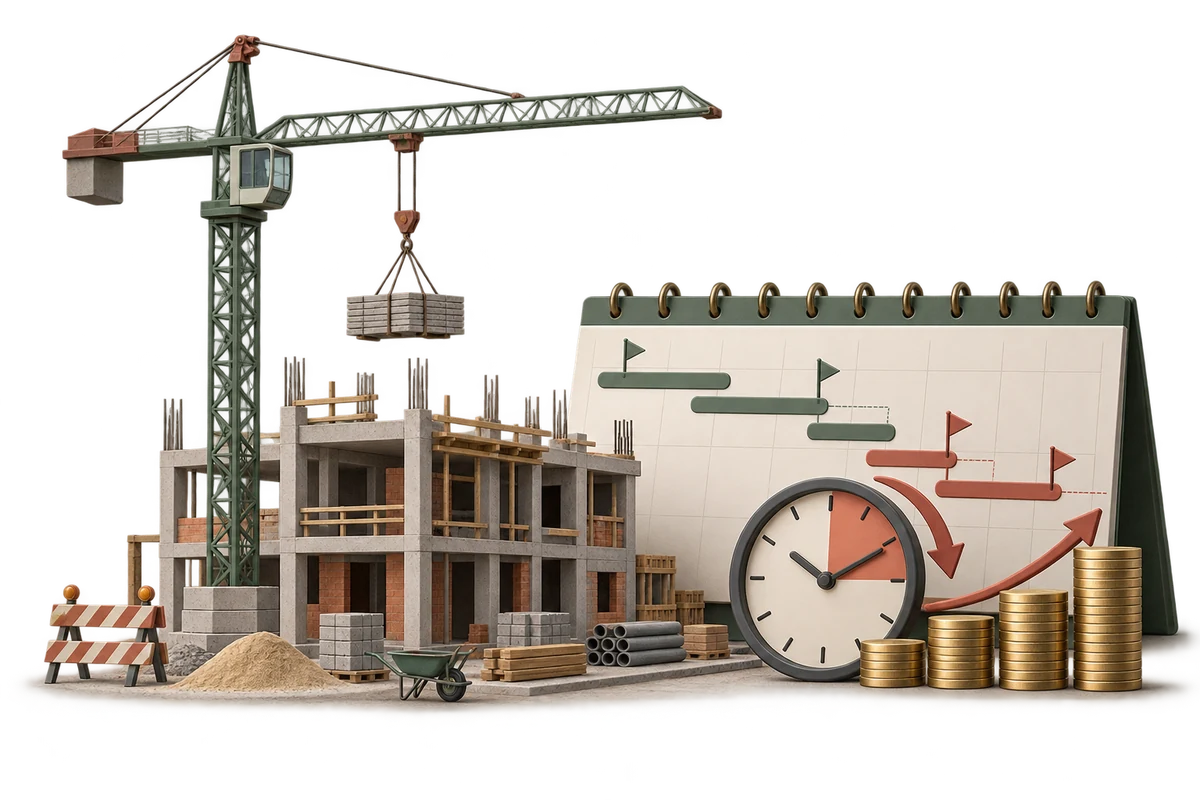
Every month of the build carries interest, taxes, insurance and overhead, so time behaves like a trade cost that never bids competitively. A defensible pro forma states the construction duration and the lease-up period as explicit assumptions and prices a slip — because the question is never whether a delay would hurt, but how many months of delay the profit can absorb.

Completed value, stabilization and lease-up
The exit side of the model is what the finished building is worth: either a value per square foot for a for-sale project, or — for a property you will operate — stabilized NOI divided by an exit cap rate. Stabilization is the point where occupancy and rents reach normal operating levels; the months between completion and stabilization have real costs and reduced income, and belong in the model rather than in the gap between two spreadsheets.

Yield on cost and the development spread
Yield on cost — stabilized NOI divided by total development cost — is the development world’s cap rate: what the project earns on what it took to build. Compare it to the market cap rate the same building would trade at.
That gap is the development spread, and it is the entire argument for building instead of buying: if the spread is thin, you are taking construction risk, lease-up risk and schedule risk for a return the market would have sold you without them.
Go deeper: Yield on Cost in Real Estate Development
Where development deals break
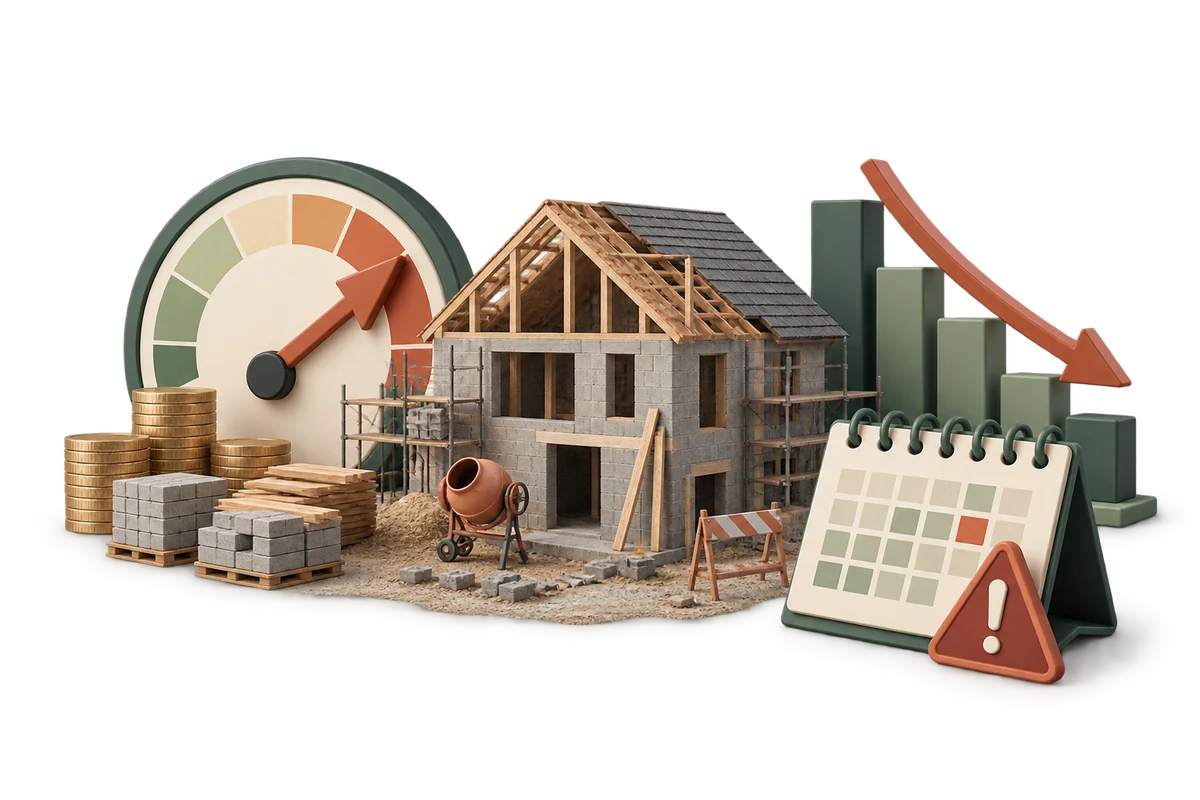
The two big misses are correlated: hard costs run over in the same conditions where exit values come in soft. Underwriting a development means pricing that pair together — re-running profit at a higher cost per foot and a weaker exit at the same time — plus the quieter risks: entitlement and permitting delay before the first draw, and a lender whose loan-to-cost leaves more equity to raise than the sponsor planned.
A pro forma that has never been re-run at its bad case is a brochure.
Development vocabulary, briefly
Short versions here; where a full article exists, it owns the detailed treatment.
Hard costs
The physical construction: sitework, structure, systems, finishes. Usually the largest bucket, priced per buildable square foot.
Soft costs
Everything required that is not construction: design, engineering, permits, legal, financing fees, carry. Escalates with time rather than with materials.
Contingency
The budget line for what you cannot yet see, set as a percentage of costs. In the model from day one so every reported return is already net of it.
Loan-to-cost (LTC)
Construction loan divided by total project cost. Sets the equity requirement and, with the draw schedule, how much interest accrues before income exists.
Interest reserve
The budgeted funds that pay the construction loan’s interest during the build, sized on the average drawn balance across the schedule.
Draw schedule
The timetable on which the lender funds the loan against completed work. It is why construction interest is modeled on the drawn balance, not the commitment.
Stabilization
The point where the finished property reaches normal occupancy and rents. Value and permanent financing are both underwritten to it.
Yield on cost
Stabilized NOI divided by total development cost. Held against the market cap rate, the gap is the development spread — the reward for building.
Development profit / return on cost
Completed value minus total development cost; that profit over cost is the project’s return. The number the whole model exists to test.
Go deeper, by subtopic
Building the pro forma2 articles
Financing the build2 articles
Measuring development economics1 article
Related guides: Real Estate Underwriting · Multifamily Investing · Property Research · All guides
 Put it into practice
How DealWorthIt fits in
Connect the development budget to financing and completed value before committing to the project.
- 01
Build the budget
Keep land, hard costs, soft costs, and contingency visible as separate inputs.
- 02
Plan the funding
Model construction financing, funding order, and interest on drawn balances.
- 03
Test the exit
Review development profit and return on cost, then rerun a cost overrun or weaker exit.
Supports residential, retail, office, mixed-use, and industrial development. The sample simplifies financing, selling costs, and taxes.
DealWorthItSample workspaceDevelopment pro forma
| Development budget | Basis | Amount |
|---|---|---|
| Land acquisition | Budget | $400,000 |
| Hard construction costs | Budget | $1,600,000 |
| Soft costs & contingency | Budget | $400,000 |
Simplified development example. Financing interest, sale costs, and taxes are excluded. Projections are not guaranteed.
Build the pro forma before you break ground
Model the budget, the construction loan and the exit for a ground-up project — and price the bad case before you commit.