Single-family investing: three strategies, three different models
The same house is a different investment depending on your exit: hold it for rent, renovate and sell it, or assign the contract. Each strategy has its own math, its own risks, and its own definition of a good deal.
For investors buying houses as rentals, flips or wholesale deals — especially anyone tempted to analyze all three with the same calculator.
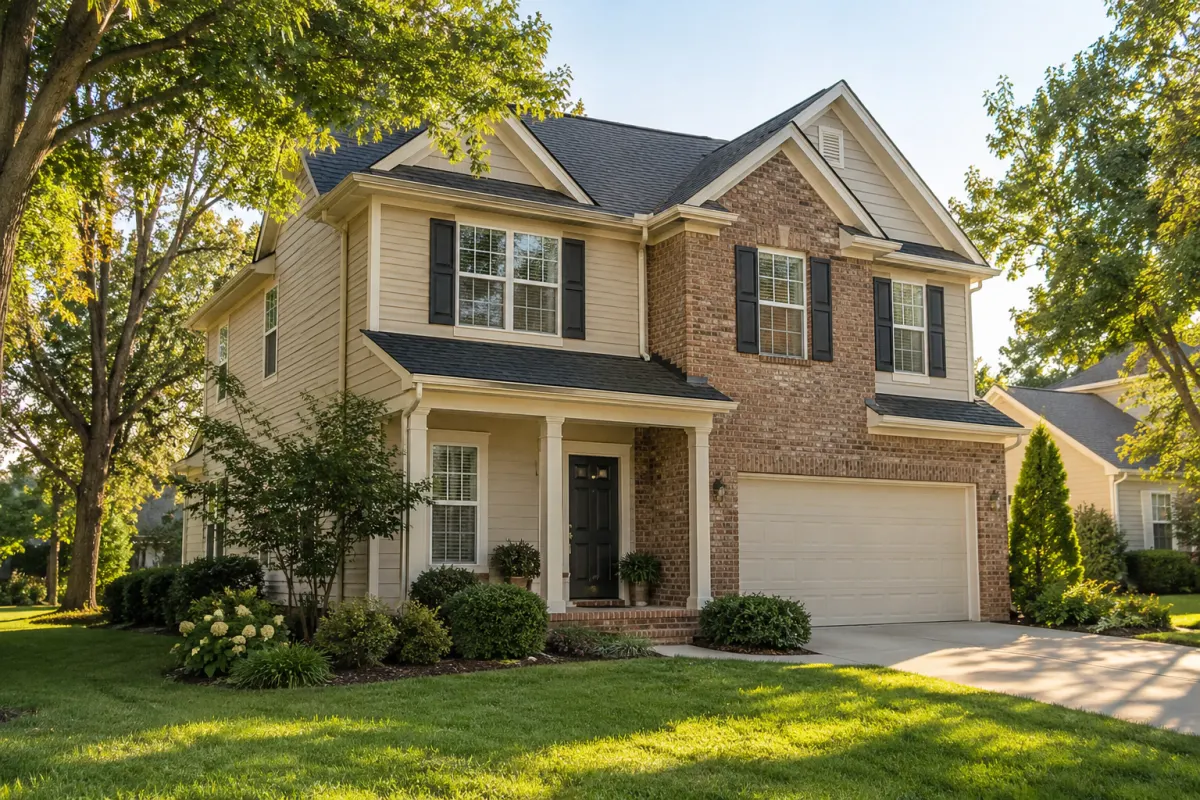
Single-family investing is buying houses to produce a return through one of three main strategies: buy and hold (rent the property and earn cash flow plus long-term appreciation), fix and flip (renovate and resell for a profit over all-in cost), or wholesaling (contract the property and assign the contract to another buyer for a fee). The strategy decides the analysis — a number that makes a rental good, like a modest but durable monthly cash flow, says nothing about whether the same house works as a flip.
What the three share is an entry discipline: the return is largely made at purchase. Overpay and no strategy rescues the deal; buy right and more than one exit stays open.

Buy and hold: the rental model
A rental is underwritten down the same waterfall as any income property, at house scale: market rent, minus vacancy, operating expenses, taxes, insurance, maintenance, reserves and any management fee, gives NOI; minus debt service, cash flow. Cash-on-cash return — annual cash flow over the cash you actually put in — is the strategy’s headline number, and the honest version includes the expenses new landlords skip: turnover, capital reserves, and management even if you self-manage today, because your time is not free and your successor’s certainly is not.
Appreciation is real over long holds but is the reward, not the plan; a rental that only works if prices rise is a speculation with tenants.
Go deeper: How to Analyze a Buy-and-Hold Rental Property · How to Profit from Long-Term Hold as a Real Estate Investor · How to Calculate Cash Flow in Real Estate? · How to Increase Your Property Cash Flow in 6 Ways?

Fix and flip: profit after everything
A flip’s model is subtraction from the after-repair value: ARV, minus purchase price, rehab budget, buying and selling costs, financing costs and the holding costs that run every month you own it. The two numbers that kill flips are the two easiest to get wrong — the rehab budget (bid it, then add contingency, because the surprise is behind the drywall) and the ARV (comp it against renovated sales, not asking prices).
Time is the silent expense: a two-month slip is two more months of interest, taxes, insurance and utilities subtracted straight from profit.
Go deeper: How to Underwrite a Fix and Flip Deal

Wholesale: the spread is the deal
A wholesaler earns the gap between the contract price and what an end buyer will pay — the assignment fee. The discipline is that your maximum allowable offer is derived from the END BUYER’s math, not yours: what a flipper can pay for the house (their ARV, their rehab estimate, their margin) minus your fee.
Overestimate the ARV or underestimate repairs and the spread evaporates when real buyers run real numbers — which is why credible wholesalers underwrite the deal as carefully as the flipper who will buy it.
Go deeper: How to Analyze a Wholesale Deal: MAO & Assignment Spread

The 70% rule and other screens
The 70% rule — pay no more than 70% of ARV minus repairs — is a screen, not an underwrite: it says nothing about your carry, your financing or how long the house will sit. Use screens to decide which deals earn a full model, then run the full model before you write the offer.
The shortcut and the real number can sit far apart on the same house, and the difference is your margin.

Choosing between houses and units
Single family buys you a lower entry price, simpler management, the deepest financing market and the easiest exit — every family in the neighborhood is a potential buyer, which is also why houses are valued on comps rather than income. Multifamily buys you scale and income-based valuation.
The comparison is worth making explicitly before you commit a strategy, and the guides below make it with numbers.
Go deeper: Single Family vs Multifamily Investment: Which Is Best for You Now? · The Ultimate Guide to Cash Flow: Single vs. Multifamily Properties
Single-family vocabulary, briefly
Short versions here; where a full article exists, it owns the detailed treatment.
ARV (after-repair value)
What the property will be worth renovated, established from comparable renovated sales. The number every flip and wholesale calculation hangs from.
Rehab budget
The renovation cost, bid line by line with a contingency on top. The most commonly underestimated number in the model.
Holding costs
Interest, taxes, insurance and utilities for every month you own the property. Time converted into expense.
70% rule
A screening shortcut: offer at most 70% of ARV minus repairs. A filter for which deals deserve a full model — never a substitute for one.
Maximum allowable offer (MAO)
The most you can pay and still hit the required margin — for a wholesaler, derived from the end buyer’s numbers minus the assignment fee.
Assignment fee
What a wholesaler is paid to assign the purchase contract to the end buyer. The spread between the contract price and what the deal supports.
Cash-on-cash return
Annual pre-tax cash flow over total cash invested. The rental strategy’s headline metric, and the one your financing moves.
Cash flow
Rent minus everything — operating costs, reserves and debt service. What the rental actually pays you to own it.
Read the full article →Go deeper, by subtopic
Buy and hold5 articles
Fix and flip1 article
Wholesale1 article
Single family vs multifamily2 articles
Related guides: Real Estate Underwriting · Multifamily Investing · Property Research · All guides
 Put it into practice
How DealWorthIt fits in
Choose the workflow that fits the house and the strategy you intend to execute.
- 01
Choose your strategy
Use separate workflows for buy and hold, fix and flip, and wholesale.
- 02
Review the evidence
Keep ownership, tax, transaction history, and comparables beside the property.
- 03
Price the downside
Edit rent, renovation, holding-cost, or exit assumptions before sharing the analysis.
The interactive example shows a simplified rental model. Verify property records and assumptions before making an offer.
DealWorthItSample workspaceSingle-family analysis
| Rental assumptions | Basis | Amount |
|---|---|---|
| Monthly rental income | Scheduled | $2,400 |
| Vacancy assumption | 5% | -$1,440 / yr |
| Operating expenses | Annual | $9,600 |
Simplified annual example. 75% LTV, 6.5% interest, 30-year amortization. Closing costs, reserves, capital expenditures, and income taxes excluded. Projections are not guaranteed.
Analyze the house for the strategy you actually intend
Run a rental, a flip or a wholesale deal through the model built for it, and share the result with your partner, lender or buyer.