
What Is a Good Cap Rate for Multifamily Investment?
Part of the Multifamily Investing guide.

What is CAP Rate?
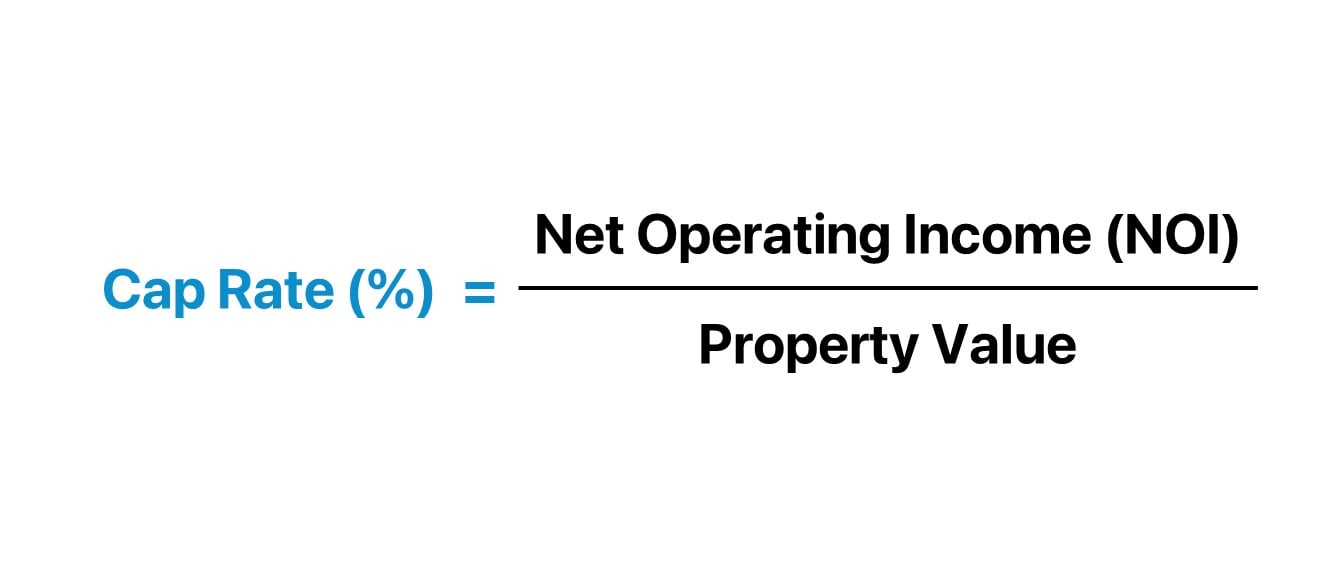
The capitalization rate of a commercial real estate property is a way to measure its profitability, shown as a percentage.
In simple terms, it is the yearly percentage of return on investment if you were to pay all cash for the property.
It is calculated by dividing the property's net operating income (NOI) by the purchase price. NOI represents the income a property brings in after subtracting all other operating costs like insurance, maintenance, and property taxes.
What Factors Can Affect a CAP Rate?
Various factors can impact a capitalization rate, including the type of property being assessed, its condition, market trends, and the property's location.
- Location: High-demand areas can contribute to lower CAP rates than those that are off the radar. Investors are willing to pay more for the same income given the stability and predictability.
- Property Type: Similar to location, property types that lend themselves to offer consistent stream of of income, such as multifamily apartment complexes and retail buildings, have lower CAP rates than single-family homes.
- Property Condition: Properties that need repairs tend to have higher CAP rates compared to those in good condition. Due to the risk associated with the quality, consistency of income and risk associated with maintaining and running the property, the value of such properties is lower and hence the higher CAP rates.
- Market Conditions: Rates can also be impacted by market conditions – strong markets with higher demand can lead to lower CAP rates.
What does your cap rate tell you?
Imagine you buy a rental property. The cap rate helps you estimate the property's unlevered annual yield — its income relative to its price, before any loan. It's a percentage you get by dividing the property's net operating income (NOI) by its market value.
Let's break it down with an example:
- You buy a property for $1,000,000.
- The property brings in $100,000 per year in rent (income).
- It costs $25,000 per year to maintain the property (expenses).
Net Operating Income (NOI) is income minus expenses:
- NOI in this case is $100,000 (income) – $25,000 (expenses) = $75,000.
So, the cap rate is:
- $75,000 (NOI) / $1,000,000 (market value) = 0.075.
- As a percentage, this is 0.075 x 100 = 7.5%.
In simpler terms, the 7.5% cap rate means the property's operating income equals 7.5% of your total purchase price each year, before debt service and capital costs.
How long will it take to get your money back?
Another way to look at the cap rate is how long it takes to recoup your entire investment.
In the above example, it would take roughly 100% / 7.5% = 13.3 years to get your original $1 million back through the property's income. Treat that strictly as an unlevered illustration: it ignores debt service, capital expenditures, reserves, vacancy swings and any growth or decline in NOI, all of which change the real payback period.
What's a good cap rate?
Generally, a cap rate between 4% and 10% is considered a good range. Here's a quick guide:
- Lower cap rate (around 4%) – Slower return, but likely a safer and more stable investment.
- Higher cap rate (around 10%) – Faster return, but potentially a riskier investment.
Remember, cap rate isn't the whole story.
Future market changes, vacancy rates, and unexpected costs can all affect your actual return. The 7.5% cap rate is just an estimate based on current conditions. Average cap rates move with interest rates, lending conditions and local demand, and they differ sharply by market and asset class — so a national average has a short shelf life. Rather than anchoring on a figure quoted here, check a current cap-rate survey (CBRE and CoStar both publish one) and, more importantly, the actual sale comps in your submarket.
Conclusion
The CAP rate helps real estate investors see how profitable a property could be, in addition to factors like location and property condition. By looking at the CAP rate, investors can better understand the risk and reward of an investment.
Ready to take the next step in your multifamily investing journey?
DealWorthIt is your comprehensive software for detailed real estate analysis and important market insights. Our software empowers you to underwrite your multifamily deal and make well-informed investment decisions.
Check out DealWorthIt today to unlock the full potential of your multifamily investments!
Ready to analyze your next deal?
Find, research, analyze, compare, and present real estate deals with DealWorthIt.
Related workflow in DealWorthIt: Multifamily
← Back to all articles